Free Crochet Blanket Wrap Pattern for Any Season
This Crochet Blanket Wrap Pattern is versatile, cozy and perfect for any season! This advanced crochet pattern is sure to become an heirloom!
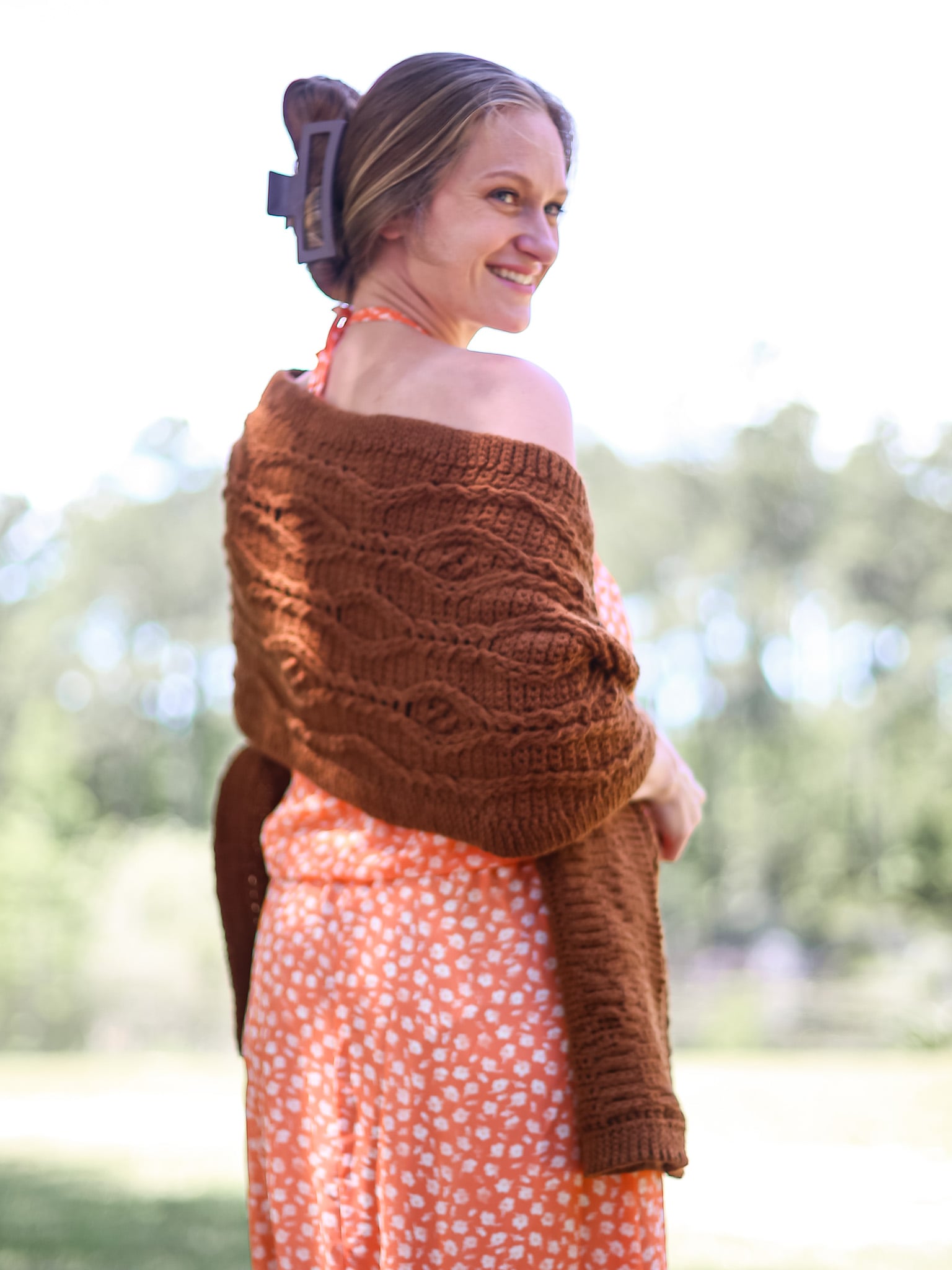
Make this modern design with heirloom flair to create a detailed cable work shawl that is perfect to drape over your sun sunkissed shoulders on a summer night. Or style this crochet rectangle shawl as an oversized scarf when the weather gets chilly!
Use the Table of Contents below to navigate this blog post and get started making this free crochet pattern today, Happy Crocheting!
Best Bang for your Buck, get a Kit From Lion Brand includes a PDF ad-free pdf version of this pattern and Yarn!
Get a PDF Pattern on in my Etsy Shop or Ravelry!
About this Multi-Seasonal Wrap
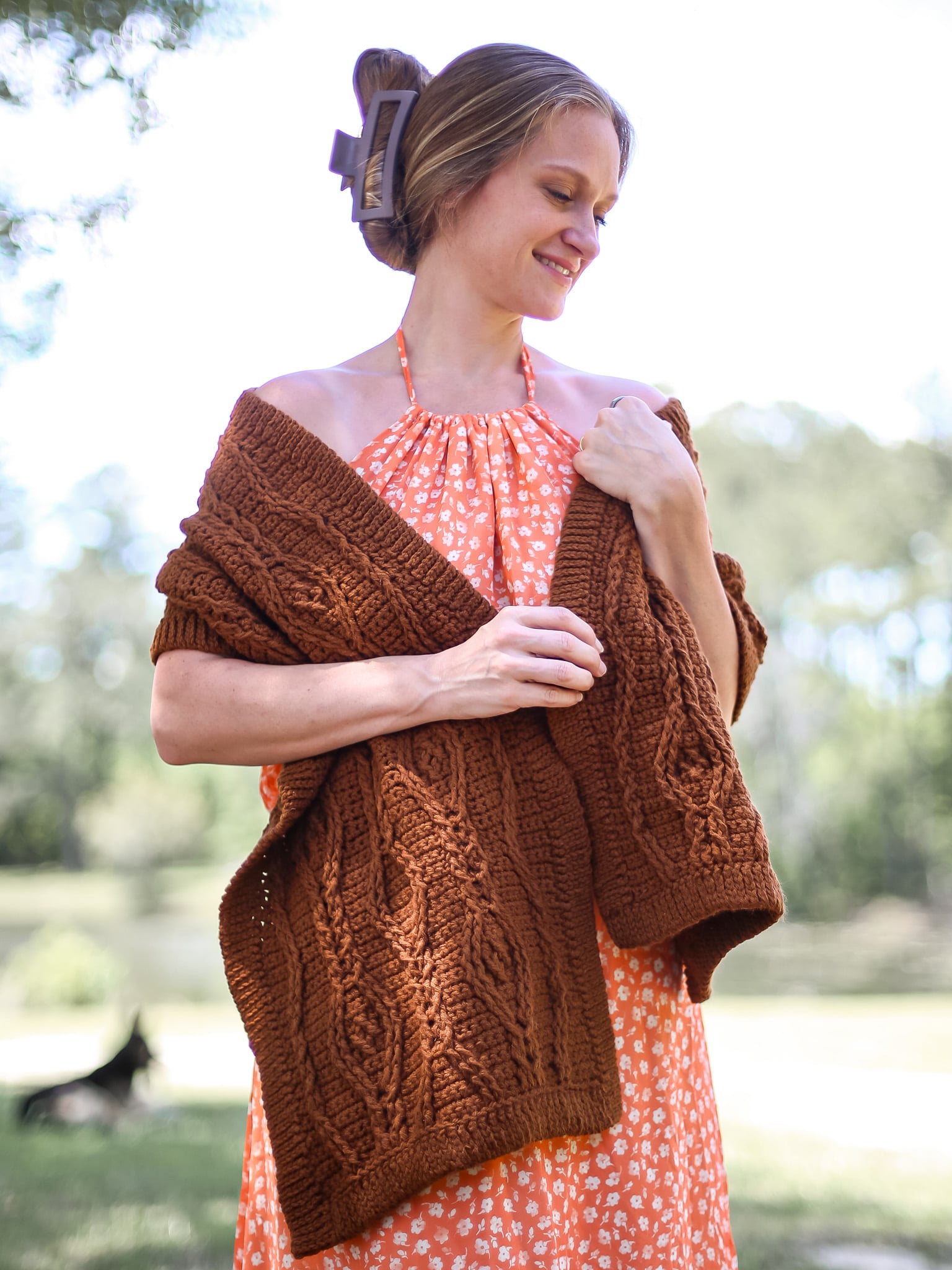
What makes this pattern unique, besides the trellising cabled diamonds, is that it is oversized and can be styled in so many different ways. Although I designed this free crochet wrap pattern using Wool-Ease, a worsted weight yarn from Lion Brand, don’t think that this is a cool weather only pattern!
Wool-Ease, with the right stitches and some blocking or steaming, creates a beautiful drape that makes this thick crochet wrap deceivingly lightweight!
Wear this rectangle wrap delicately over your sun kissed shoulders after a day spent on the beach to stay cozy on a summer night!
I must tell you how quick of a crochet project this is, that it would be a perfect gift! Once you get the hang of the cabled it works up surprisingly fast!
As an added bonus, you can keep this blanket wrap out all year long and transition its styling to match any season!
I have created a video tutorial, so if you are a determined advanced beginner or visual learner have no fear!
If you love this pattern, check out my Diamond Trellis Heirloom Cardigan or my Diamond Trellis Heirloom Blanket!
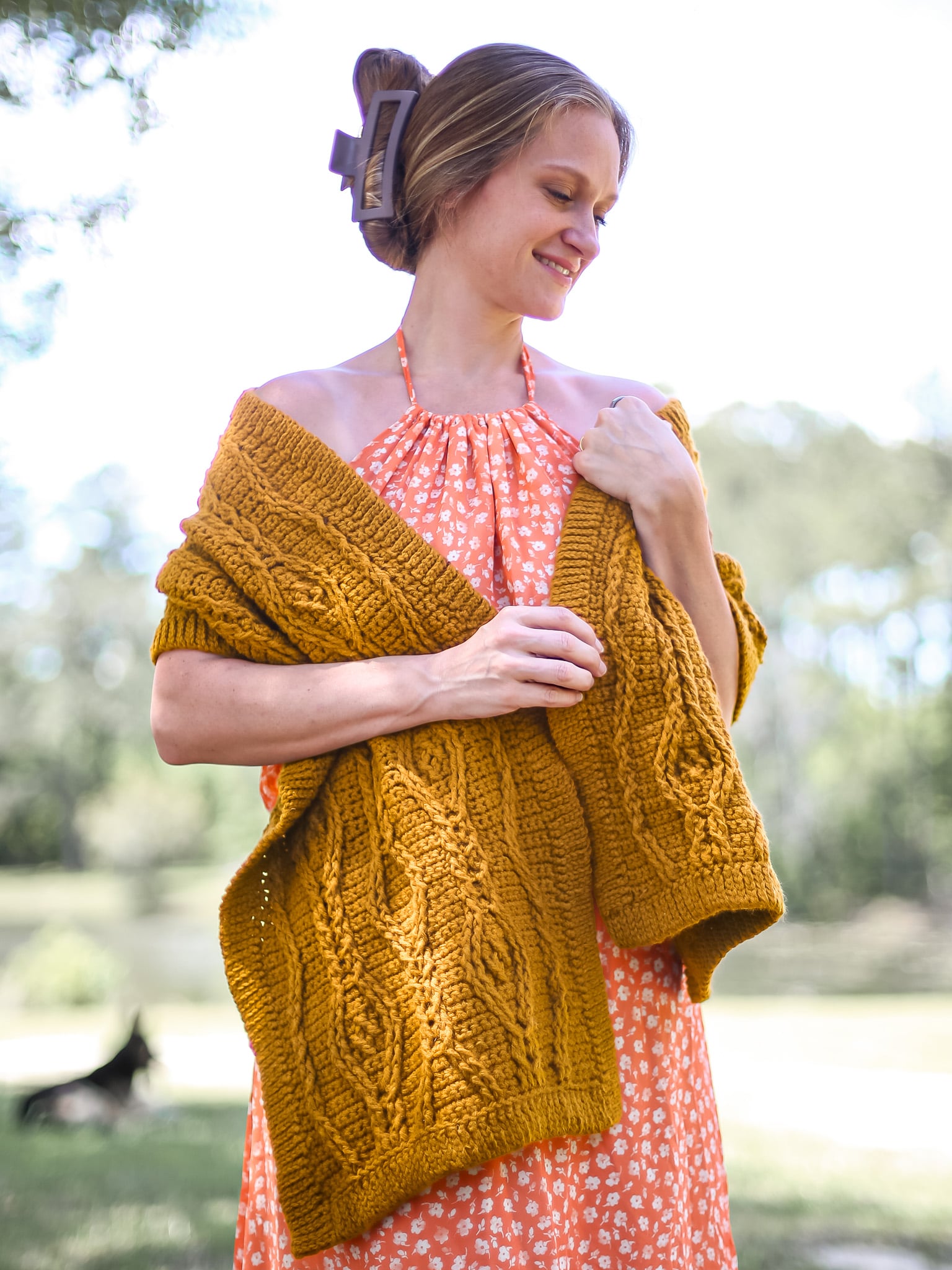
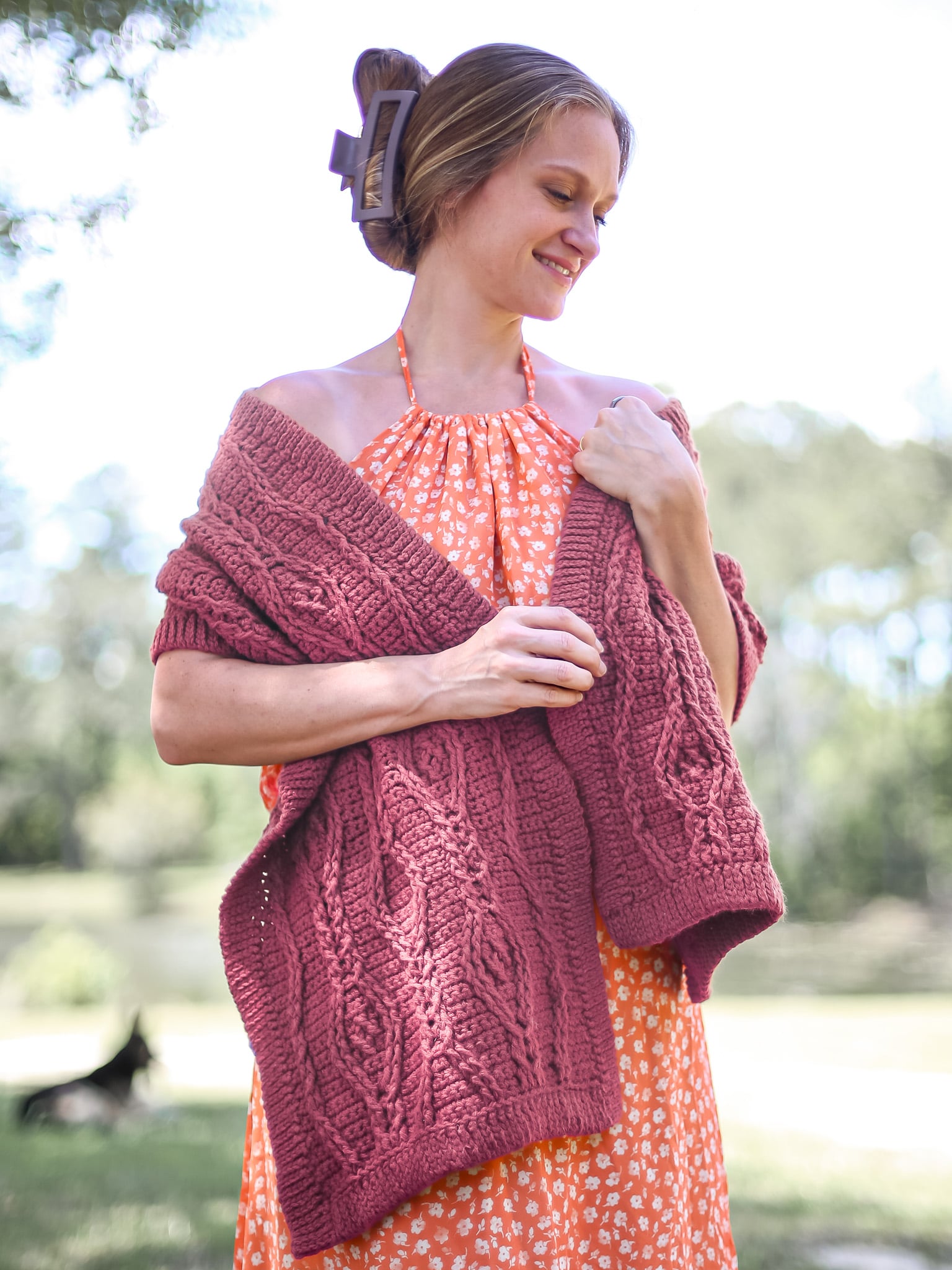
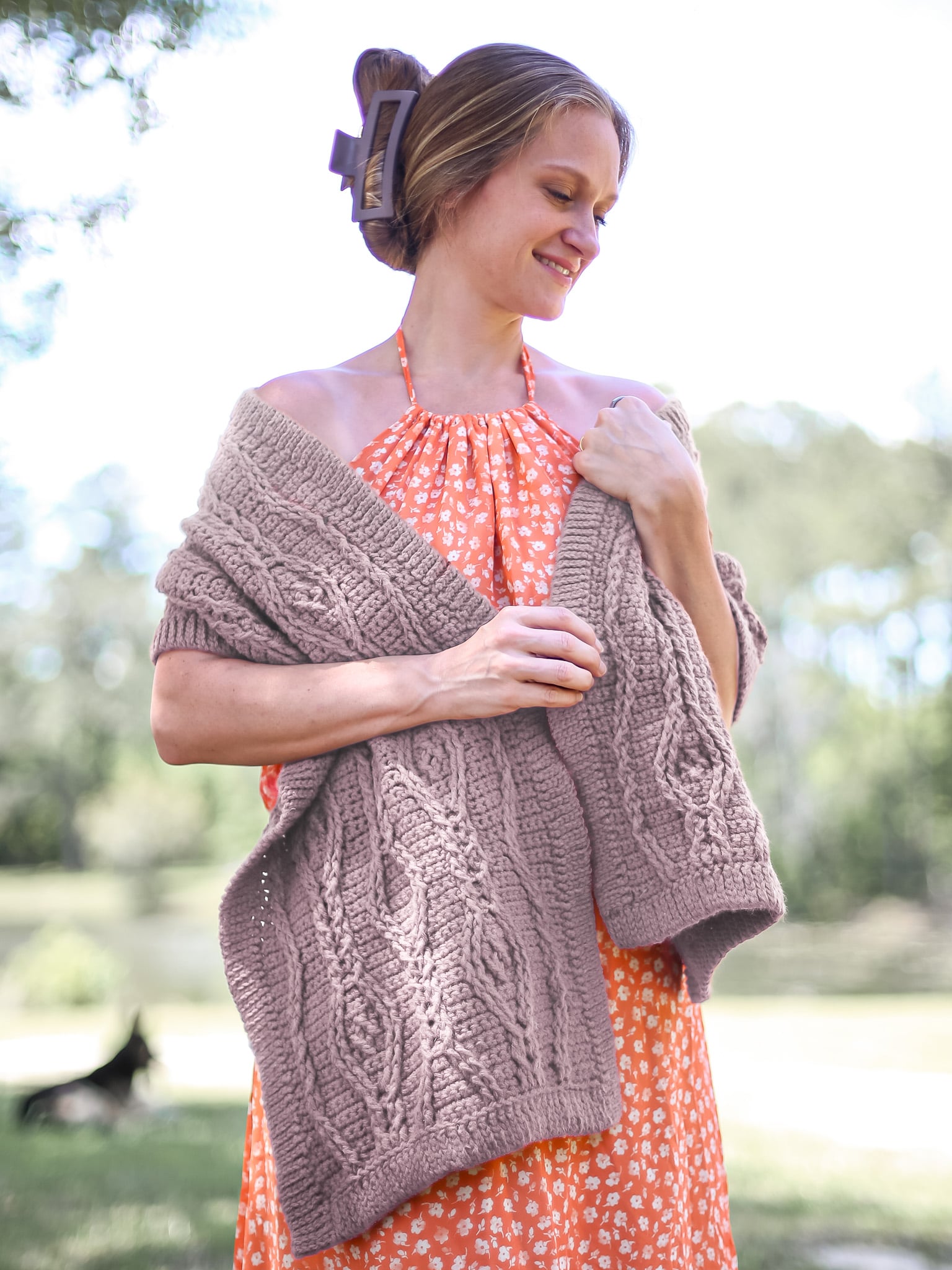
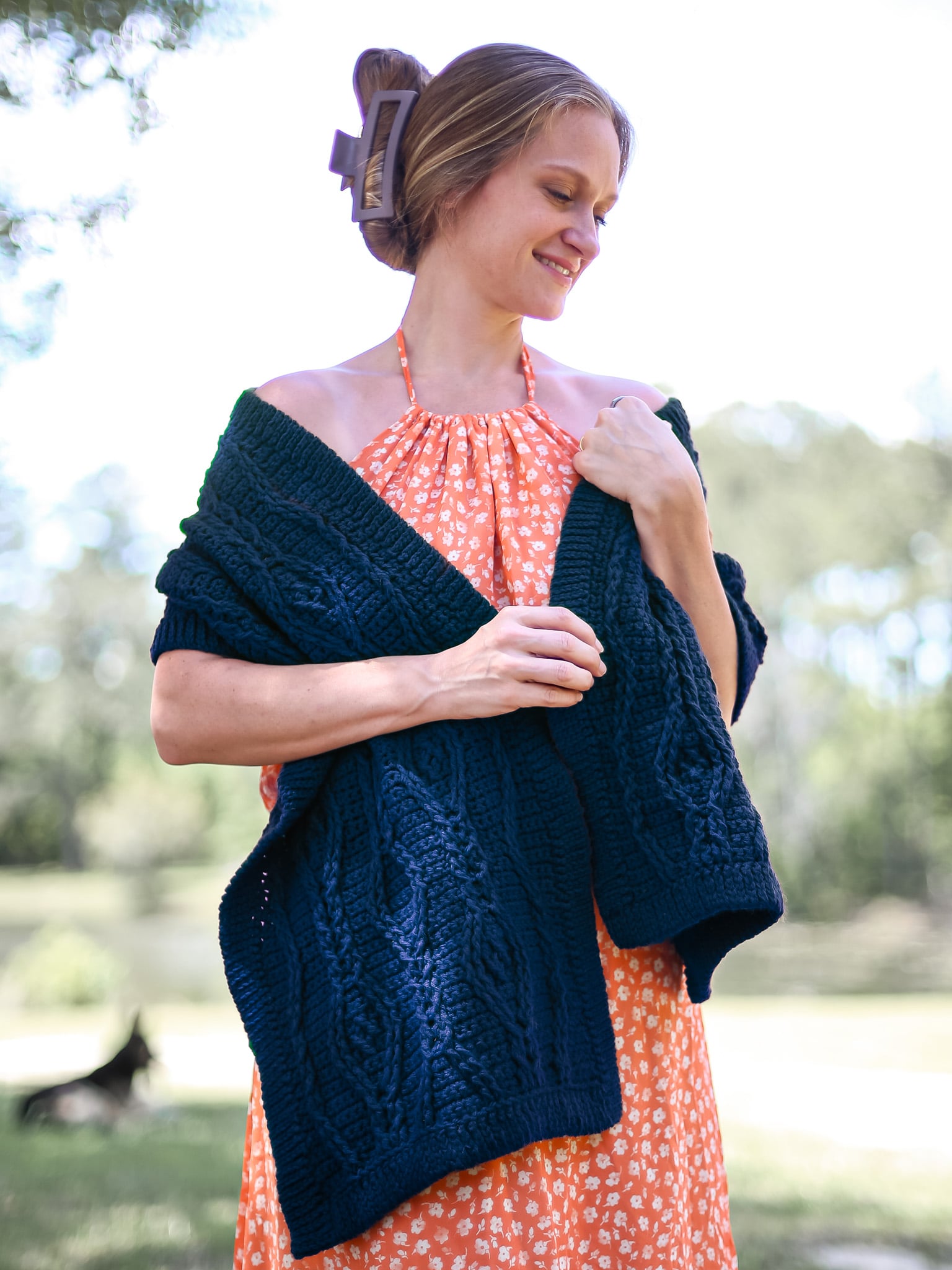
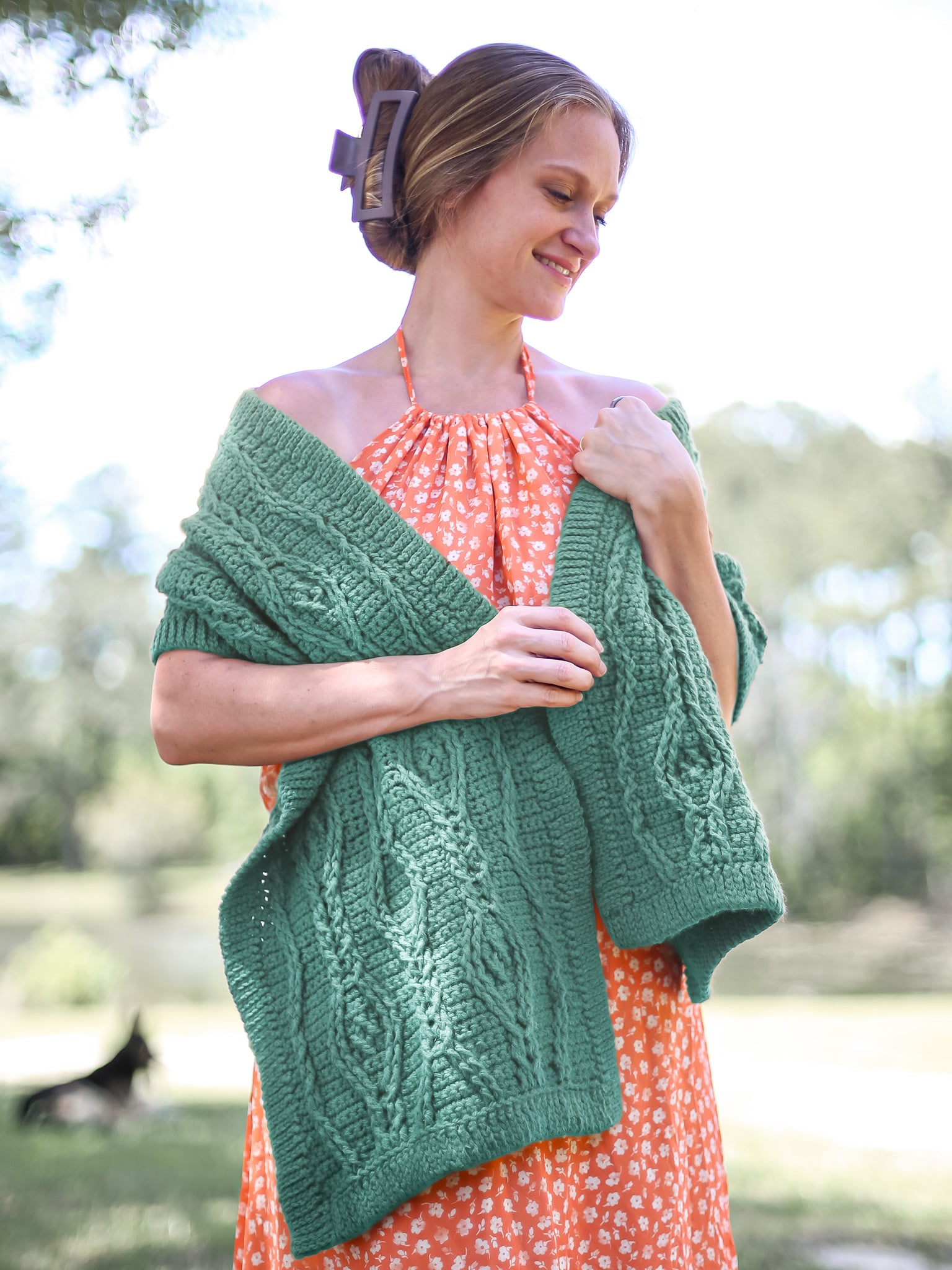
Color Choices for Any Season
This blanket wrap was made using Wool-Ease, an 80% acrylic, 20% wool blend that combines the warmth of wool with the easy-care benefits of acrylic making it a yarn that is perfect for any season.
This worsted weight yarn comes in 30 gorgeous colors so you will surly be able to find a color that matches your style and fits the season you are creating for.
Created for a Collection
This crochet blanket wrap pattern was created in collaboration with Lion Brand to bring you a collection of heirloom quality crochet pieces.
Crochet is meant to help you slow down, create with intention and help you to disconnect to reconnect. Yarn crafts have been experiencing some sort of a revival, especially among a younger generation searching for a tangible hobby.
I designed these 4 pieces to take my grandma hobby to the next level creating yet more advanced crochet patterns that allow my brain to stretch. I hope you enjoy all of them as much as I enjoyed creating them!
- Diamond Trellis Heirloom Blanket Wrap (that’s this one!)
- Garden Heirloom Baby Blanket
- Woven Tiles Heirloom Throw
- Simple Diamond Heirloom Poncho
Come find me on…
- Like my Facebook Page
- Join my Facebook group!
- Subscribe to my YouTube Channel for Free Crochet Video Tutorials
- Get PDFs on Etsy
- Get PDFs on Ravelry
- Sign Up for the Life and Yarn Newsletter for more free modern crochet patterns!
- Please Note: Some links may be affiliate links that help to support the Life + Yarn Blog with a small commission at no added cost to you, thank you!
- Copyright 2026, Life and Yarn, Brianna Iaropoli. Pattern contents are NOT to be re-shared, DIRECT LINKS ONLY to this post for the pattern.
Materials
- Size 6.00 mm crochet hook
- 6 Skeins of Lion Brand Wool-Ease in Umber [620-026A]
- Worsted Wt. No. 4 Yarn – 1180 yards or 17.3 ounces
- 2 Stitch Markers
Yarn Substitutes
Lion Brand has a huge Worsted Weight Yarn Selection and here are a few that I would recommend as yarn subs if you do not want to use Wool-Ease.
- Vanna’s Choice
- Color Theory
- Pima Cotton
Looking to do some stash busting? A great thing you can do is mix yarn weights and hold them double! To use DK weight use two strands of yarn and you’ve made a worsted!
Gauge
- 15 sts by 15 rows is 4” by 4” in sc, make bigger so you aren’t measuring your first or last row and row ends.
- Whether you are working with the recommended yarn, a yarn of similar fiber content or something different, gauge for this pattern along side your preferred blocking method is EXTREMELY important.
- Lion Brand’s Wool-Ease does/can block out significantly while other fibers might not.
- My PREBLOCKED Blanket Wrap is 14 by 64”
- My BLOCKED Blanket Wrap is 14 by 68” once dry.
- I used steam blocking.
- Please note that the WORN Gauge will be a bit larger due to the weight of the final fabric.
- The cables will lay much nicer once blocked.
- If using a different fiber, say 100% wool or 100% cotton for example, you may need to change your hook and/or blocking method to reach the same Blocked/Finished Gauge.
- Remember to always check your yarn label for care instructions.
- If you would like your blanket wrap even larger consider wet blacking and pinning to really open up the stitches.
- Always treat your swatch the way you will treat your final project, some surprises are great, but not this one is not!
How to Check and Adjust Gauge
- Once you have made your gauge swatch, remember bigger than the given gauge to get an accurate measurement, measure your stitches and rows. This is your pre-blocked gauge.
- Then block your swatch in the same manner that you will block your finished blanket wrap and allow it to dry.
- Once dry, measure your swatch again, this will be your blocked gauge.
- .If your swatch is too big go down crochet hook size if it is too small go up a crochet hook size.
Sizing
- One Size: 14” by 68” blocked.
How to Adjust Sizing
- If you would like your Blanket Wrap longer add more rows.
- If you would like your Blanket Wrap shorter subtract rows.
- If you would like your Blanket Wrap wider add more stitches before AND after the repeat.
Stitch Descriptions and Abbreviations
- Chain Stitch – ch
- Stitch(es) – st(s)
- Skip – sk
- Back Loop Only – blo
- Slip Stitch – sl st
- Single Crochet – sc
- Front Post Double Crochet – FPdc -Work a double crochet as you normally would by placing your hook from front to back to front around the post of the designated stitch.
- Foundation Single Crochet – Fsc – Chain 2, insert hook into 2nd chain from hook, yarn over and pull up a loop (2 loops on hook), yarn over, draw through 1 loop, (2 loops on hook with 1 ch created), yarn over, draw through all loops (1 loop on hook, 1 foundation single crochet with chain at the bottom). *Insert hook to the bottom of the stitch you just made, it will look like the top or “V” of a stitch, yarn over, pull up 1 loop (2 loops on hook), yarn over, draw through 1 loop (2 loops on hook with 1 ch created), yarn over, draw through all loops;* repeat from * to * for desired amount of stitches.
Pattern Notes
- * Designates a repeat.
- “sc 1” means to single crochet in the next stitch.
- “sc 2” means to single crochet in each of the next 2 stitches.
- “2 sc” means to single crochet twice in the next stitch to create an increase.
- There are NO chain 1’s in the cable section but there ARE chain 1’s in the trim rows/rounds.
- Stitch count does not change from Row 1 unless noted.
- Watch the Video Tutorial for help with stitch placement and adding the trim ribbing.
- All even rows are a simple single crochet repeat row.
- All odd rows are a cable repeat row.
An Overview of Intricate Cables
- Be mindful of when it is noted to work behind or in front of a FPdc when crossing sts.
- When a FPdc is created make sure to skip the single crochet stitches behind.
- You will have the same number of stitches in all cable rows as single crochet rows.
- To create the Row 3 FPdc sts you will work them in the Fsc Row. Each next cable row will work its FPdc sts in FPdc sts of the previous row.
- Rows 15 and 17 are exceptions and have FPdc sts worked in single crochet stitches so be mindful of your stitch placement in the rows and when to work in a single crochet. Use the stitch diagram for clarity.
- Reference the stitch diagram for the repeats and proper stitch placement, note that FPdc sts are worked in FPdc sts but for clarity the diagram does NOT show the overlap.
- NOTE: The Stitch Diagram shows 2 sets of repeats.
- The Stitch Diagram for Row Repeats has the order of the placement of the FPdc sts alphabetized if you prefer a visual. Be mindful of if you are working in FRONT or BEHIND of a FPdc.
- FPdc sts are always worked in FPdc sts with the exception of Row 3 where the FPdc sts are worked in the Foundation Single Crochet Stitches of Row 1 and Rows 15 and 17.
- If you find that your FPdc stitches are too tight feel free to try using a Front Post Treble Crochet instead.
- If this is your first crochet cable project I would suggest using stitch markers at the beginner and end of the row to avoid any skipped stitches.
Crochet Blanket Wrap Pattern – Step-by-Step Pattern Instructions
Important Note: Rows 15 and 17 have FPdc sts worked in single crochet stitches so be mindful of your stitch placement in the rows and when to work in a single crochet. Use the stitch diagram for clarity.
Row 1 – Fsc 40
Row 2 – Turn, sc across in each stitch.
Note: To create the Row 3 FPdc sts you will work them in the Fsc Row. Each next cable row will work its FPdc sts in FPdc sts of the previous row.
Row 3 – Turn, sc 2, *sc 3, FPdc in each of next 2-sc sts, sc 2, FPdc in each of next 4-sc sts, sc 2, FPdc in each of next 2-sc sts, sc 3, repeat from * across, sc 2 in remaining sts.
Row 4 – Turn, sc across in each stitch.
Row 5 – Turn, sc 2, *sc 2, FPdc in each of next 2-FPdc, sc 3, sk next FPdc, FPdc in next FPdc, FPdc in previous FPdc working behind the last FPdc created, sk next FPdc, FPdc in next FPdc, FPdc in previous FPdc working in front the last FPdc created, sc 3, FPdc in each of next 2-FPdc, sc 2, repeat from * across, sc 2 in remaining sts.
Row 6 – Turn, sc across in each stitch.
Row 7 – Turn, sc 2, *sc 1, FPdc in each of next 2-FPdc, sc 4, FPdc in each of next 4-FPdc, sc 4, FPdc in each of next 2-FPdc, sc 1, repeat from * across, sc 2 in remaining sts.
Row 8 – Turn, sc across in each stitch.
Row 9 – Turn, sc 2, *FPdc in each of next 2-FPdc, sc 5, sk next FPdc, FPdc in next FPdc, FPdc in previous FPdc working behind the last FPdc created, sk next FPdc, FPdc in next FPdc, FPdc in previous FPdc working in front of the last FPdc created, sc 5, FPdc in each of next 2-FPdc, repeat from * across, sc 2 in remaining sts.
Row 10 – Turn, sc across in each stitch.
Row 11 – Turn, sc 2 *sk next FPdc, FPdc in next FPdc, FPdc in previous FPdc working in front of the last FPdc created, sc 4, FPdc in each of next 2-FPdc, sc 2, FPdc in each of next 2-FPdc, sc 4, sk next FPdc, FPdc in next FPdc, FPdc in previous FPdc working behind the last FPdc created, repeat from * across, sc 2 in remaining sts.
Row 12 – Turn, sc across in each stitch.
Row 13 – Turn, sc 2, *FPdc in each of next 2-FPdc, sc 3, FPdc in each of next 2-FPdc, sc 4, FPdc in each of next 2-FPdc, sc 3, FPdc in each of next 2-FPdc, repeat from * across, sc 2 in remaining sts.
Row 14 – Turn, sc across in each stitch.
Row 15 – Turn, sc 2, *sk next FPdc, FPdc in next FPdc, FPdc in previous FPdc working in front of the last FPdc created, sc 2, FPdc in each of next 2-FPdc, sc 2, sk next 2-sc, FPdc in next sc, FPdc in previous sk’d-sc working in front of the last FPdc created, sc 2, FPdc in each of next 2-FPdc, sc 2, sk next FPdc, FPdc in next FPdc, FPdc in previous FPdc working behind the last FPdc created, repeat from * across, sc 2 in remaining sts.
Row 16 – Turn, sc across in each stitch.
Row 17 – Turn, sc 2, *FPdc in each of next 2-FPdc, sc 2, FPdc in each of next 2-FPdc, sc 1, FPdc in next FPdc, FPdc back in sc working in front of the last FPdc created, sk next FPdc, FPdc in next sc-st, FPdc in previous sk’d-FPdc working in front of the last FPdc created, sc 1, FPdc in each of next 2-FPdc, sc 2, FPdc in each of next 2-FPdc, repeat from * across, sc 2 in remaining sts.
Row 18 – Turn, sc across in each stitch.
Row 19 – Turn, sc 2, *sk next FPdc, FPdc in next FPdc, FPdc in previous FPdc working in front of the last FPdc created, sc 3, FPdc in each of next 2-FPdc, sc 1, sk next 2-FPdc, FPdc in next FPdc, FPdc in previous FPdc working in front of the last FPdc created, sc 1, FPdc in each of next 2-FPdc, sc 3, sk next FPdc, FPdc in next FPdc, FPdc in previous FPdc working behind the last FPdc created, repeat from * across, sc 2 in remaining sts.
Row 20 – Turn, sc across in each stitch.
Row 21 – Turn, sc 2, *FPdc in each of next 2-FPdc, sc 4, FPdc in each of next 2-FPdc, sc 2, sk 2-FPdc, FPdc in each of next 2-FPdc, sc 4, FPdc in each of next 2-FPdc, repeat from * across, sc 2 in remaining sts.
Row 22 – Turn, sc across in each stitch.
Row 23 – Turn, sc 2 *sk next FPdc, FPdc in next FPdc, FPdc in previous FPdc working in front of the last FPdc created, sc 5, FPdc in each of next 4-FPdc, sc 5, sk next FPdc, FPdc in next FPdc, FPdc in previous FPdc working behind the last FPdc created, repeat from * across, sc 2 in remaining sts.
Row 24 – Turn, sc across in each stitch.
Row 25 – Turn, sc 2, *sc 1, FPdc in each of next 2-FPdc, sc 4, sk next FPdc, FPdc in next FPdc, FPdc in previous FPdc working behind the last FPdc created, sk next FPdc, FPdc in next FPdc, FPdc in previous FPdc working in front of the last FPdc created, sc 4, FPdc in each of next 2-FPdc, sc 1, repeat from * across, sc 2 in remaining sts.
Row 26 – Turn, sc across in each stitch.
Row 27 – Turn, sc 2, *sc 2, FPdc in each of next 2-FPdc, sc 3, FPdc in each of next 4-FPdc, sc 3, FPdc in each of next 2-FPdc, sc 2, repeat from * across, sc 2 in remaining sts.
Row 28 – Turn, sc across in each stitch.
Row 29 – Turn, sc 2, *sc 3, FPdc in each of next 2-FPdc, sc 2, sk next FPdc, FPdc in next FPdc, FPdc in previous FPdc working behind the last FPdc created, sk next FPdc, FPdc in next FPdc, FPdc in previous FPdc working in front the last FPdc created, sc 2, FPdc in each of next 2-FPdc, sc 3, repeat from * across, sc 2 in remaining sts.
Row 30 – Turn, sc across in each stitch.
Row 31 – Turn, sc 2, *sc 3, FPdc in each of next 2-FPdc, sc 2, FPdc in each of next 4-FPdc, sc 2, FPdc in each of next 2-FPdc, sc 3, repeat from * across, sc 2 in remaining sts.
Repeat Rows 4 to 31 – 8 MORE times for a total of 9 repeats, do NOT cut yarn and move onto Blanket Wrap Trim Instructions for Crochet Ribbing below.
Total Rows: 255 in Cable Section.
ADD DIAGRAM
How to Create Knit-Like Crochet Ribbing
I love this ribbed edging, just be sure to be mindful of you tension to avoid pinching and waving.
- Chain 6, turn so that the right side of the blanket wrap is facing you, sl st in the second chain from the hook and each next chain back to the blanket wrap. [5 total sl sts]
- Sl st in the next st of blanket wrap, turn, skip first sl st, sl st blo next 5 sts.
- Turn, ch 1, sl st blo in next 5 sl sts.
- Sl st in the next st of blanket wrap, turn, skip first sl st, sl st blo next 5 sts.
- Repeat Steps 3 and 4, skipping every 8th stitch on the blanket wrap to keep your trim from getting wavy to the last stitch. You should be at the edge of the trim, not the blanket side.
- Now repeat Steps 1 to 5 except you will be working in the Row Ends not stitches.
- Now repeat Steps 1 to 5 except you will be working in the Foundation Single Crochet Stitches.
- Now repeat Steps 1 to 5 except you will be working in the Row Ends not stitches.
- Finish off.
I hope you loved creating this crochet blanket wrap pattern and would love if you checked out some of my other rectangular shawls, triangle shawls and other styles in my Scarves, Shawls and Wraps Category!
I have many easy crochet shawl patterns using basic stitches in lots of different shapes too! So if you are a beginner crocheter looking for easy skill level patterns with simple crochet stitches go have a browse and enjoy finding another free pattern.


